Repairing Administrative Workflows: A Systems Analysis of Indie Publishing
Sept 2025-March 2026

Introduction
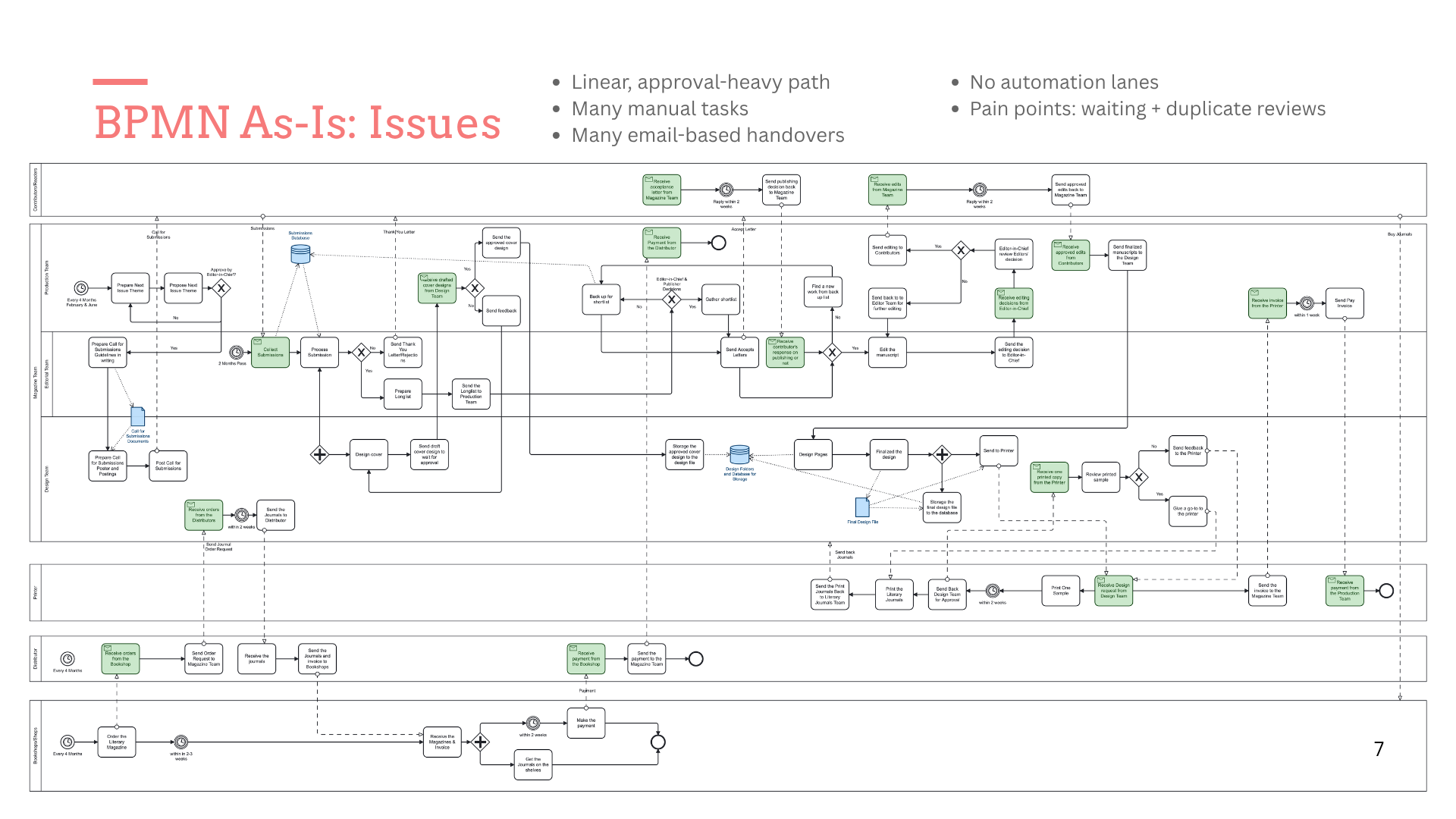
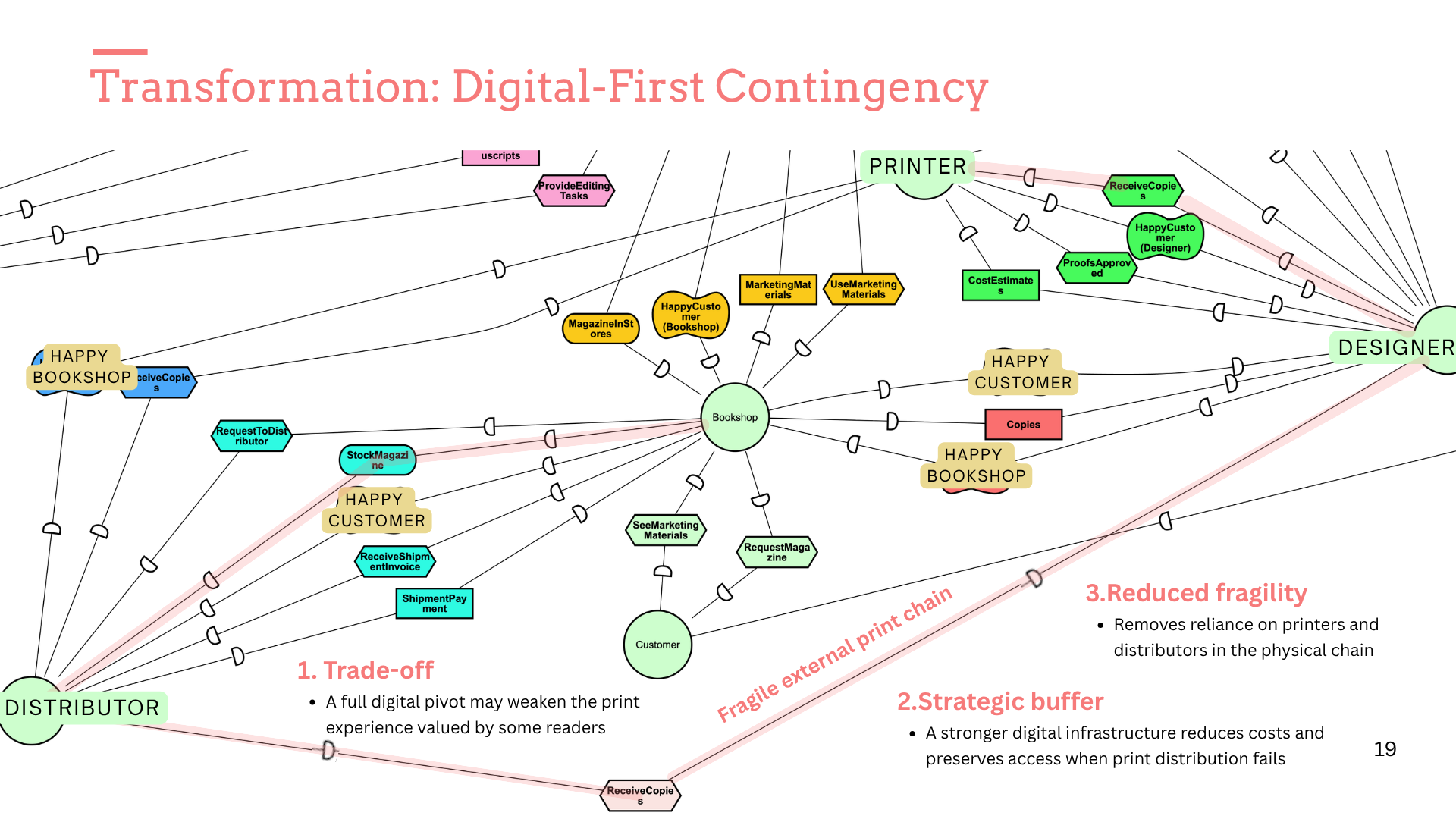
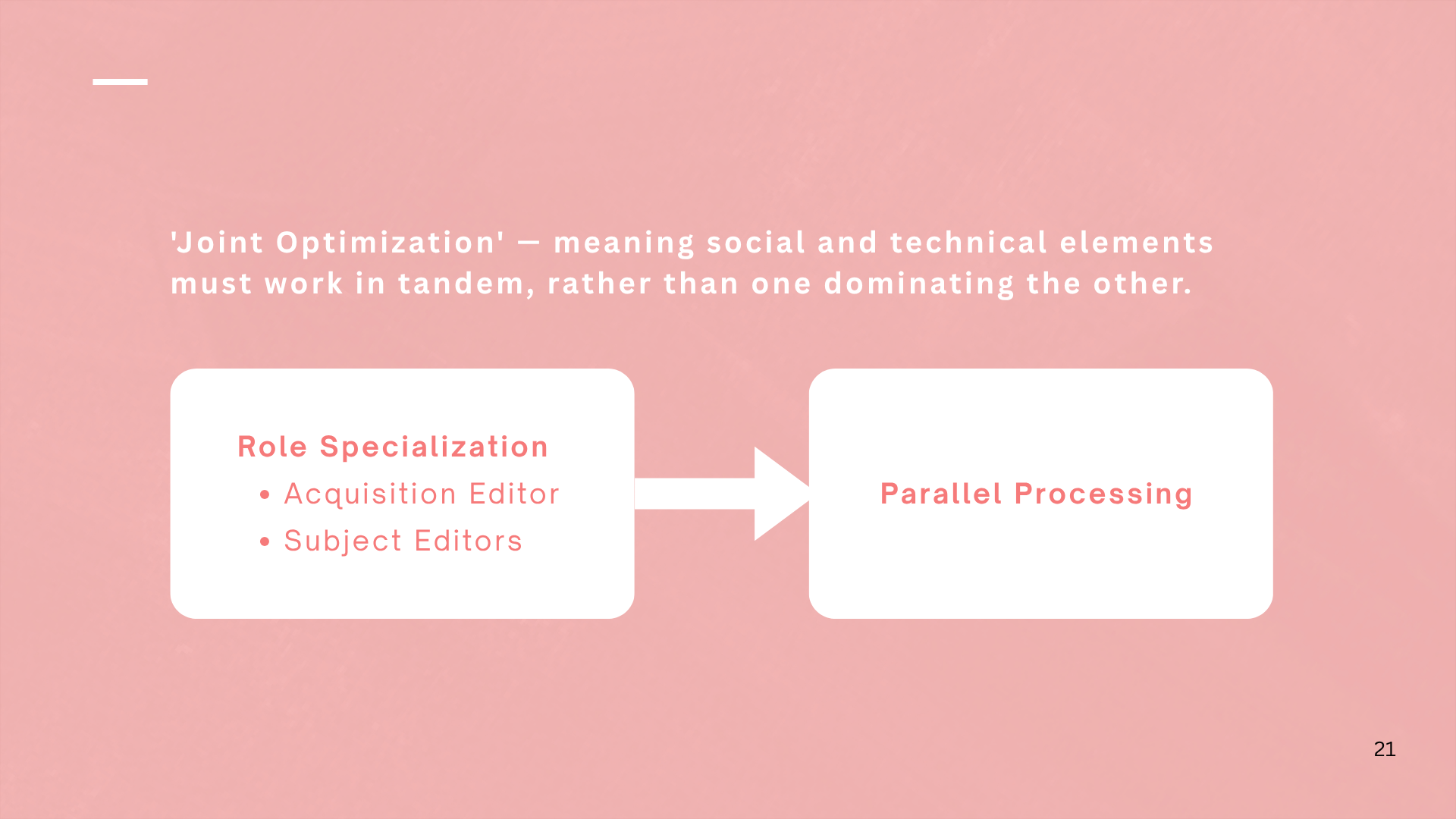
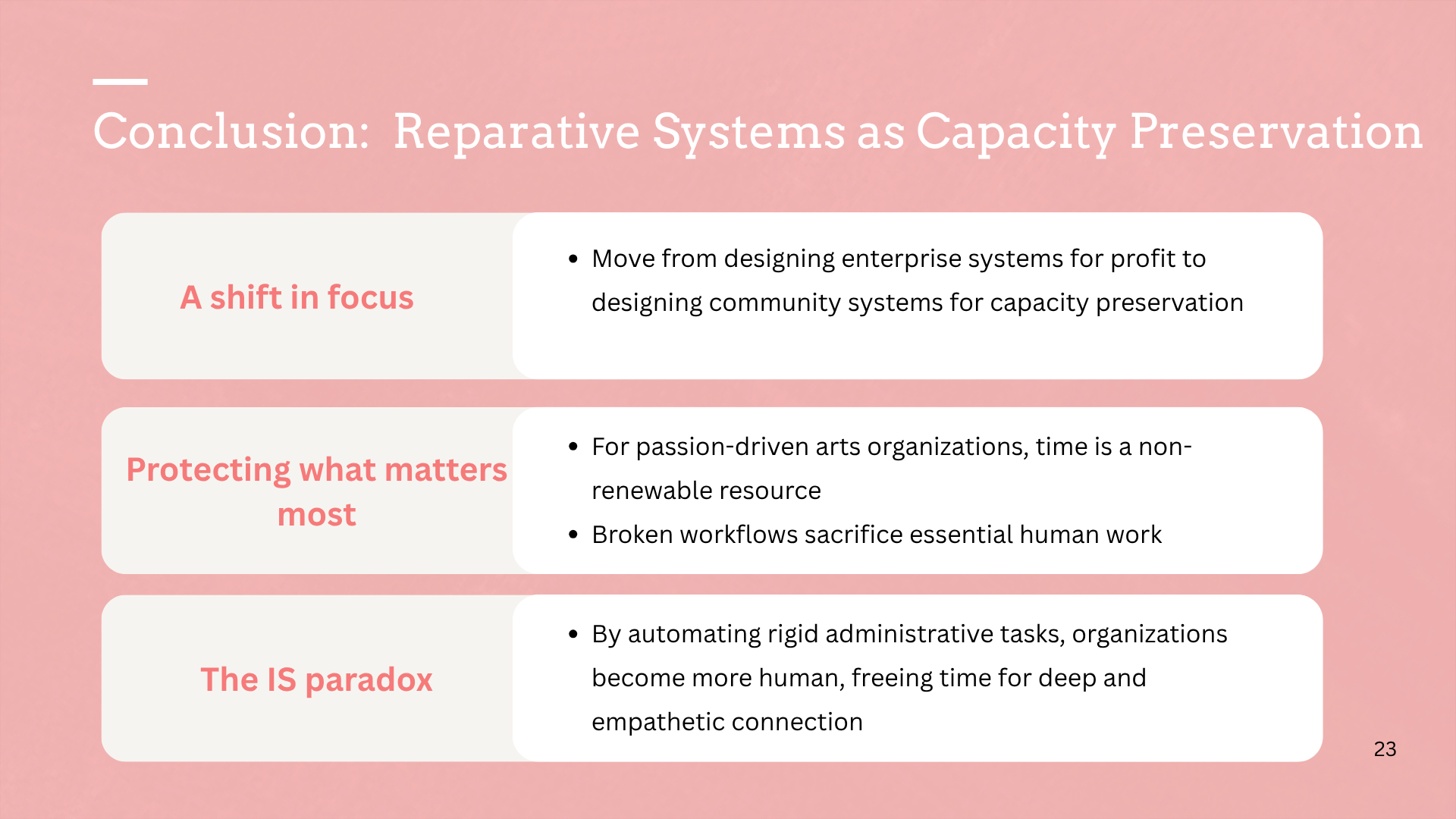
Information Systems (IS) innovation is often conceptualized in terms of enterprise efficiency and profit maximization. In contrast, small-scale arts and non-profit organizations encounter distinct operational challenges, where creative capacity and community trust serve as primary assets rather than capital. This paper presents a case study of a Toronto-based independent literary journal, employing a mixed-method systems analysis that incorporates Data Flow Diagrams (DFD), Business Process Model and Notation (BPMN), and the i* strategic framework. The analysis identifies critical vulnerabilities in manual workflows and external dependency chains. The findings indicate that, within traditional industries, IS innovation should focus on automating administrative friction to preserve the soft goals of artistic integrity, contributor relationships, and organizational sustainability, rather than replacing the human element.
Keywords: Systems Analysis, Process Innovation, Independent Publishing, BPMN, Strategic Dependency

Part I
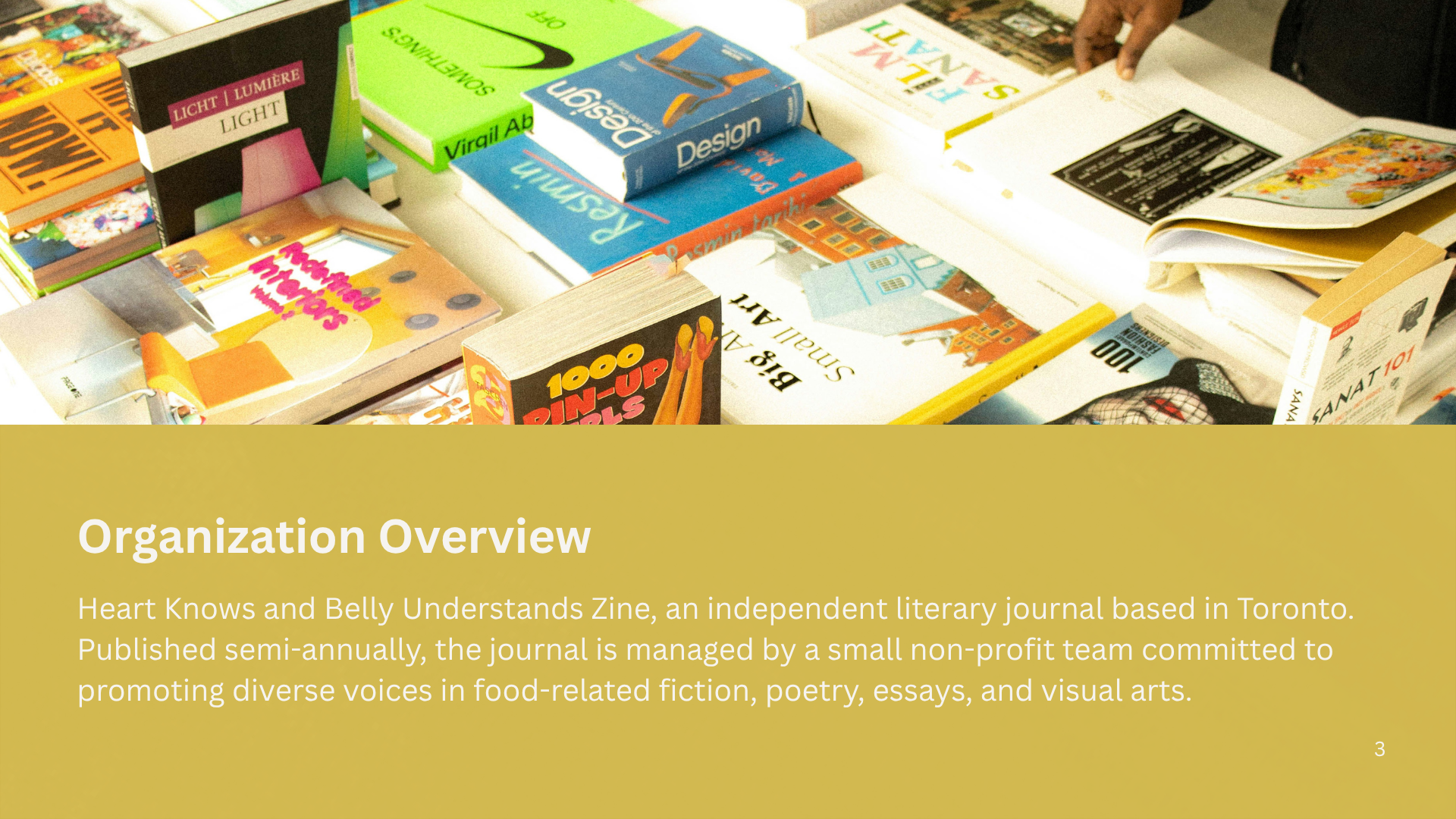
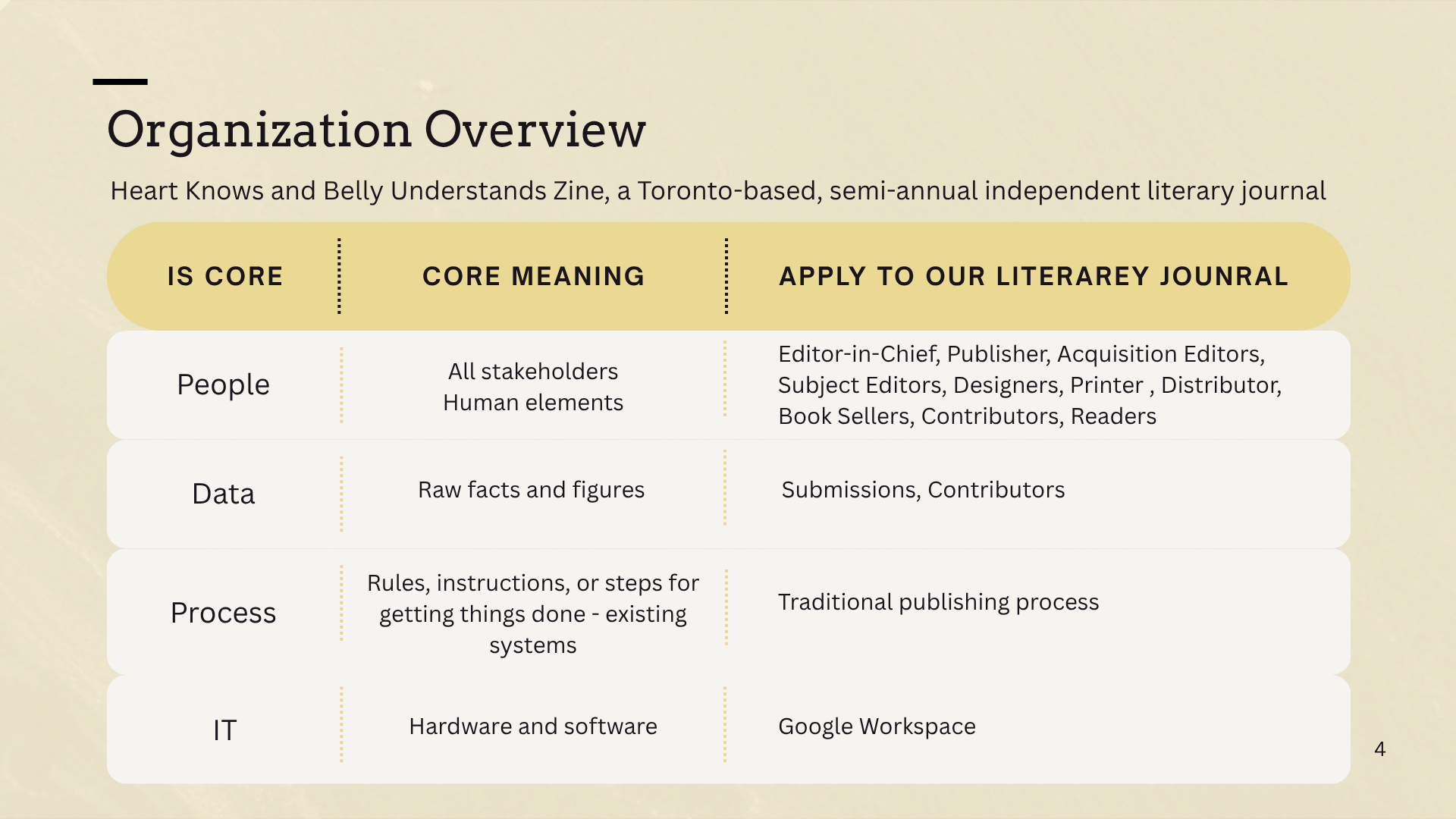
Organization Overview and Issue
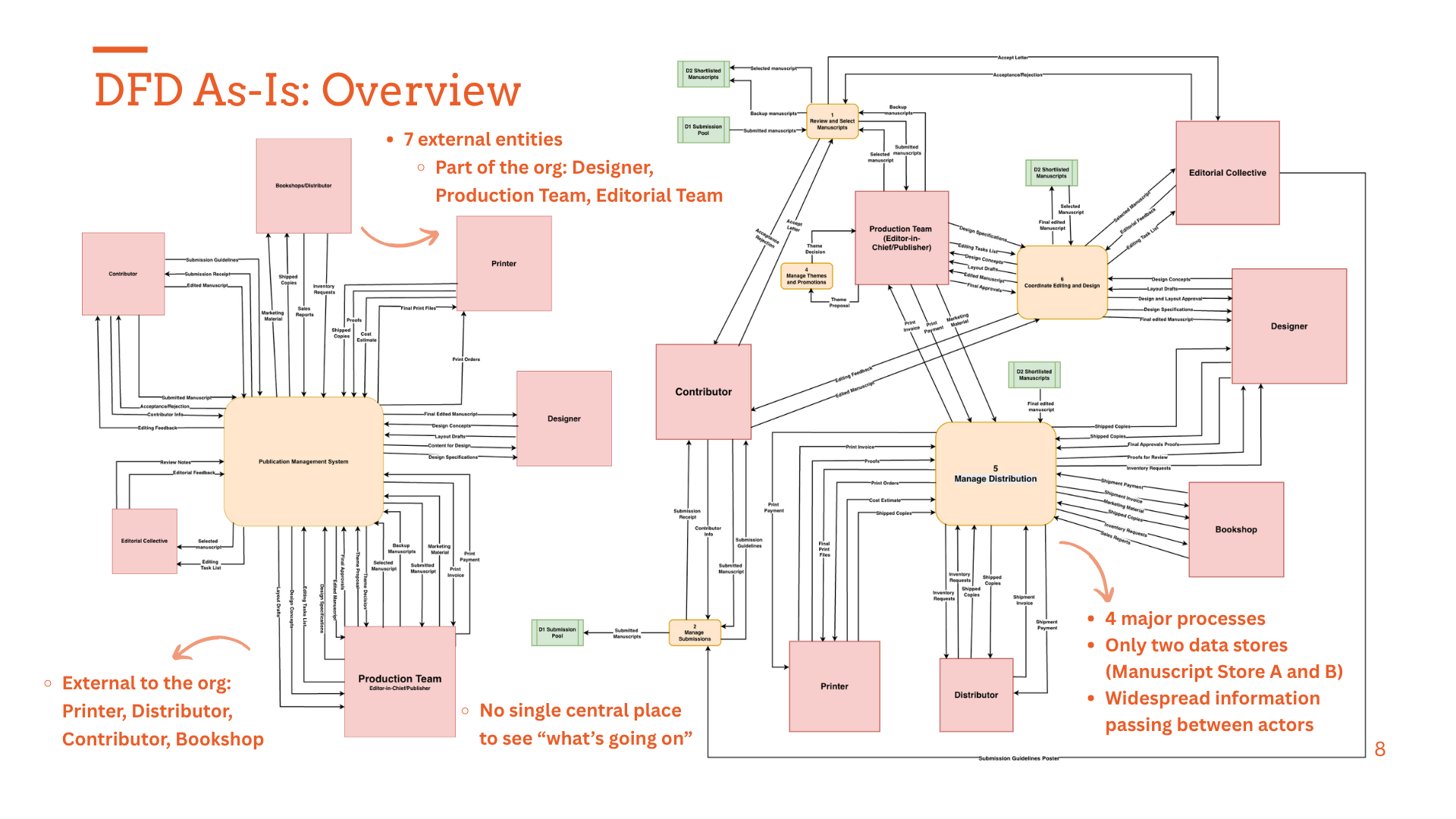
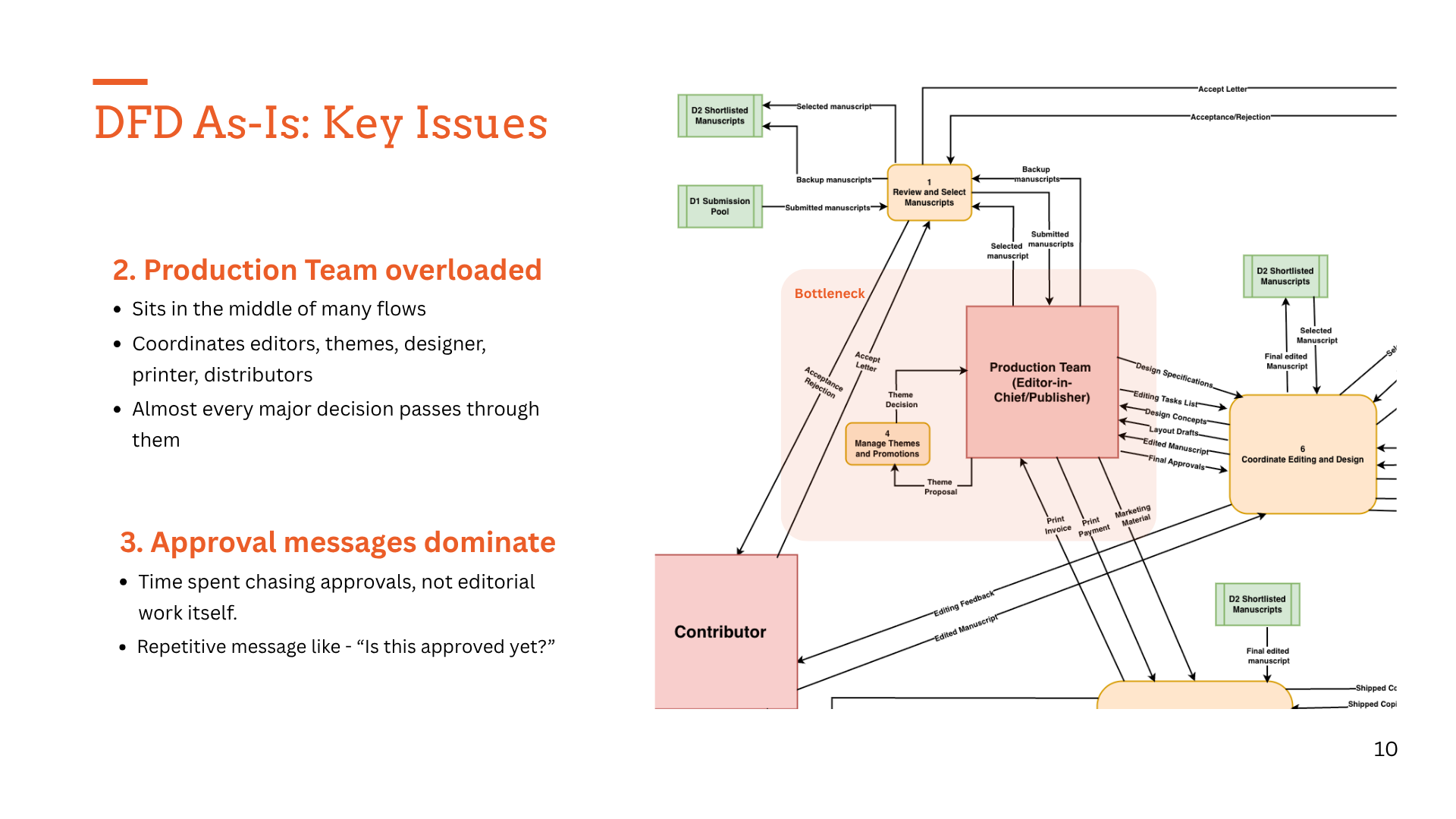
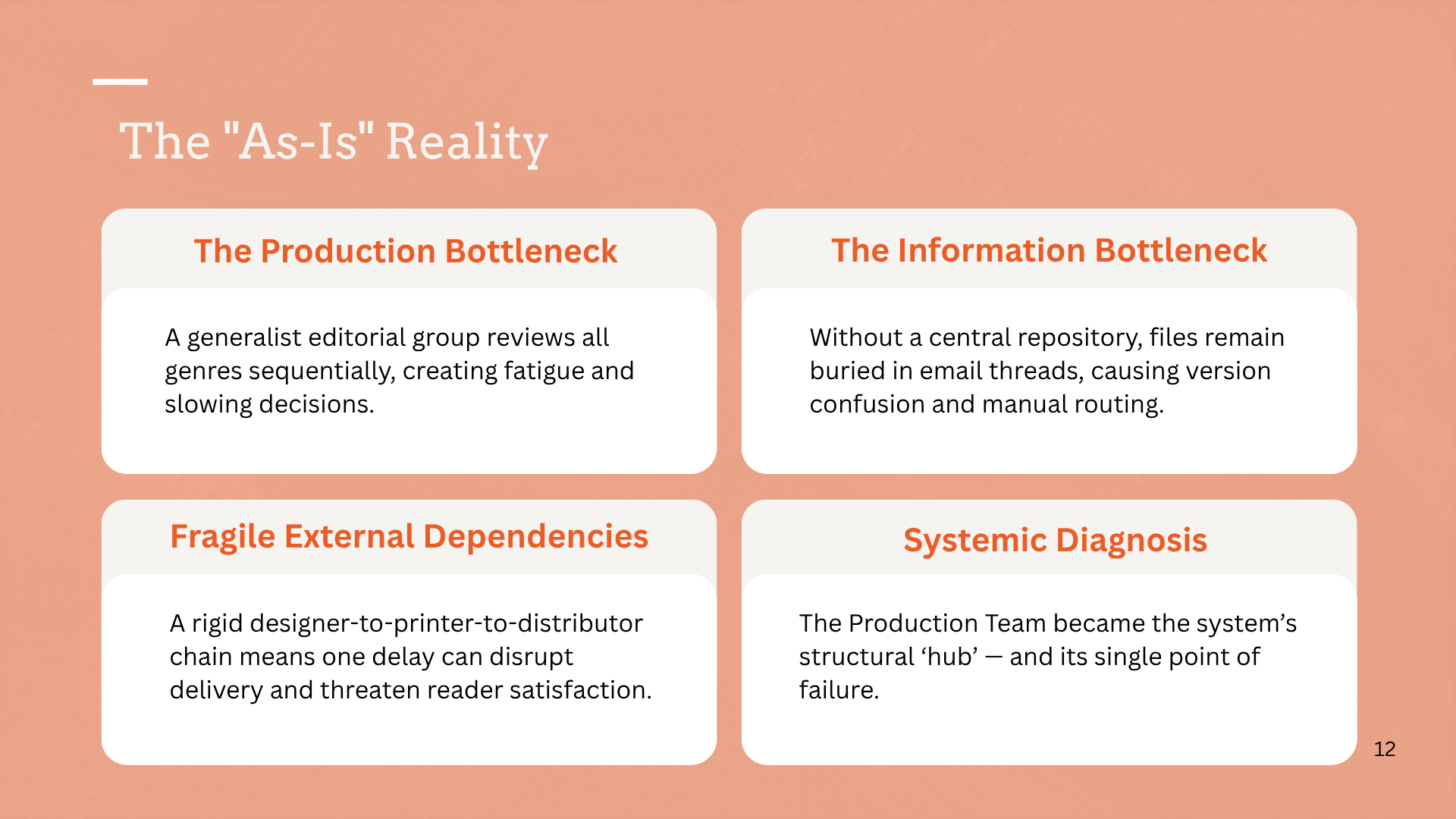
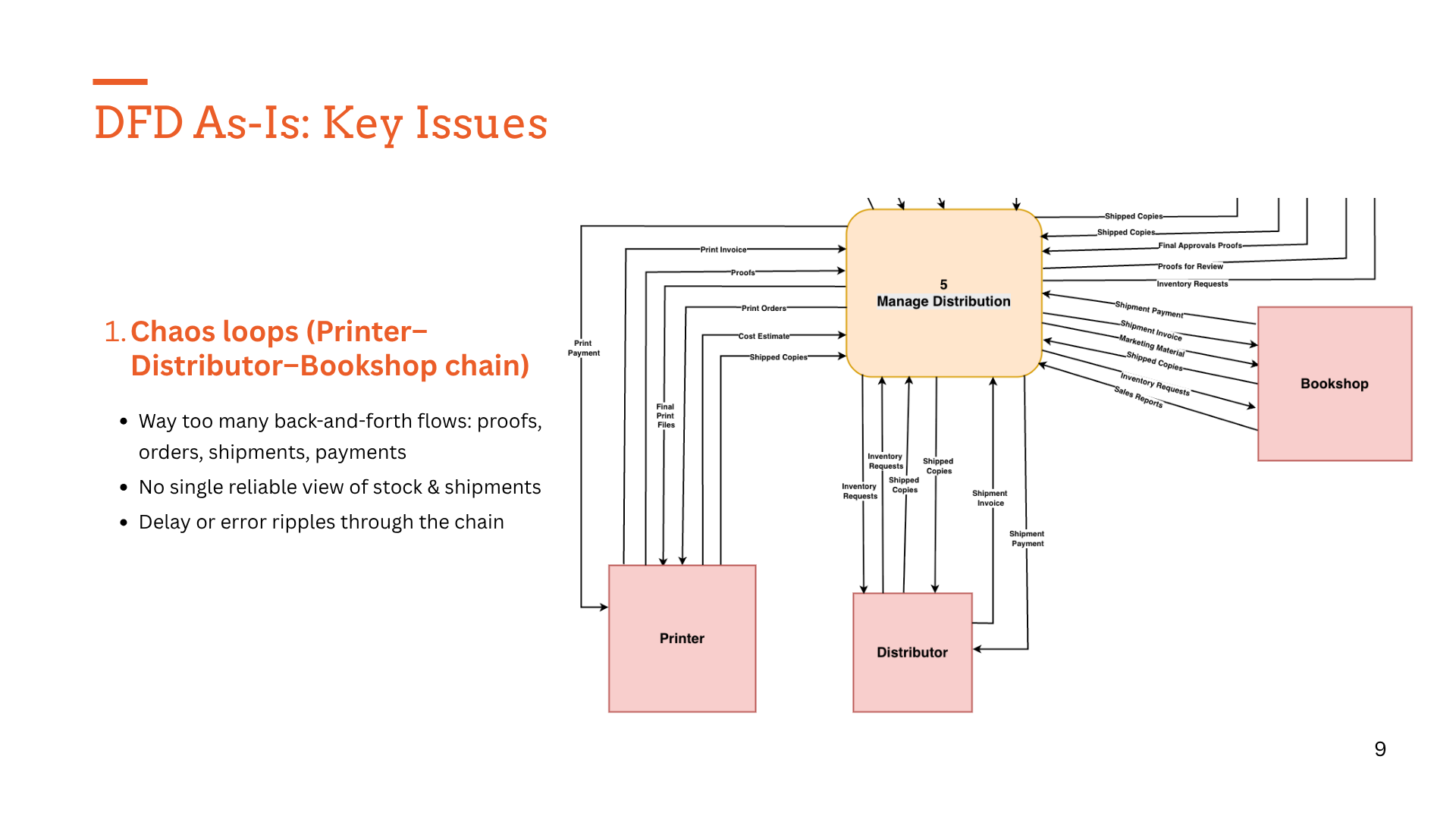
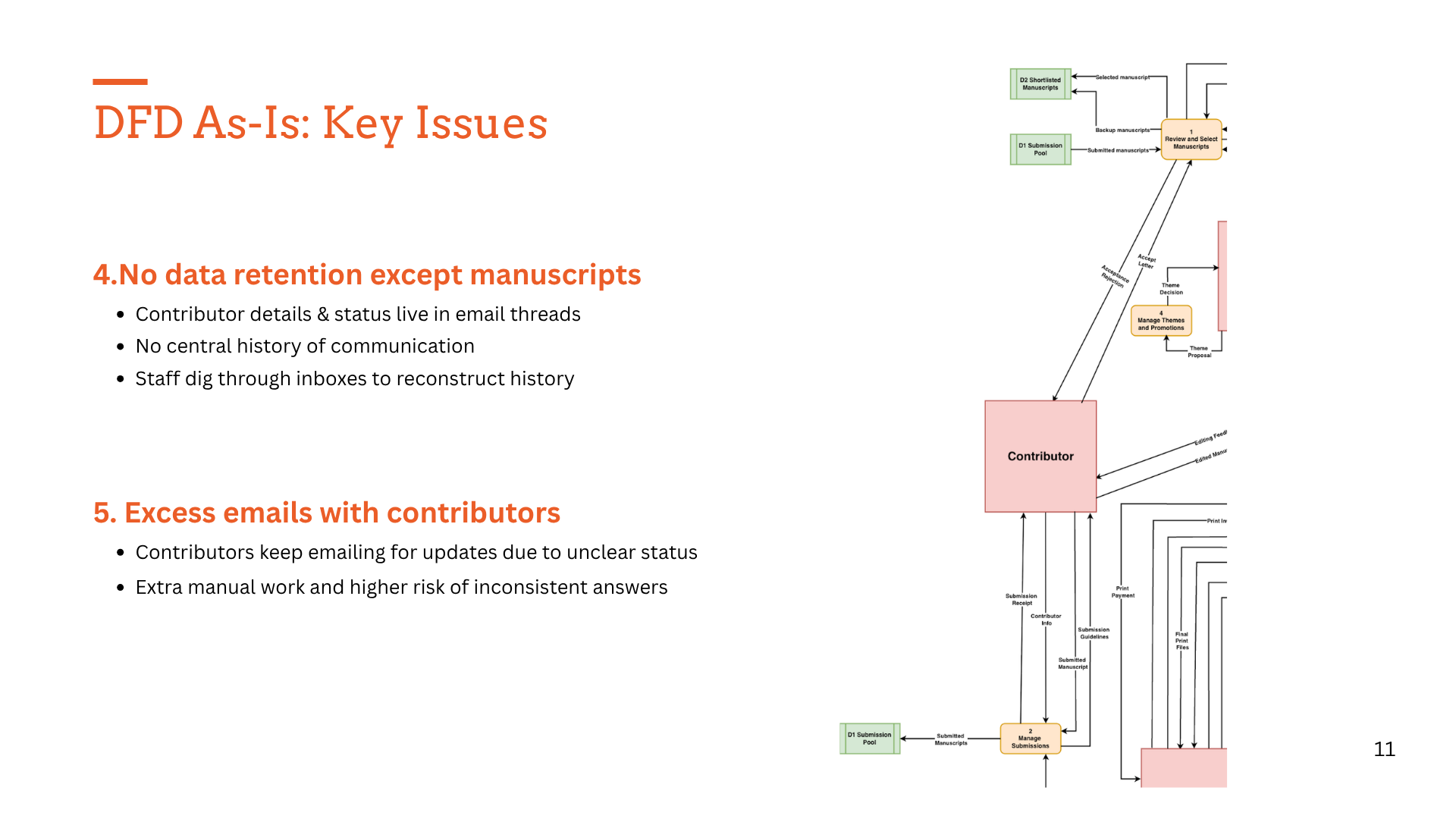
Based on DFD, we found out:
Chaos loops
Production Team overloaded
Approval messages dominate
No data retention except manuscripts
Excess emails with contributors

Part II
Proposed Solutions

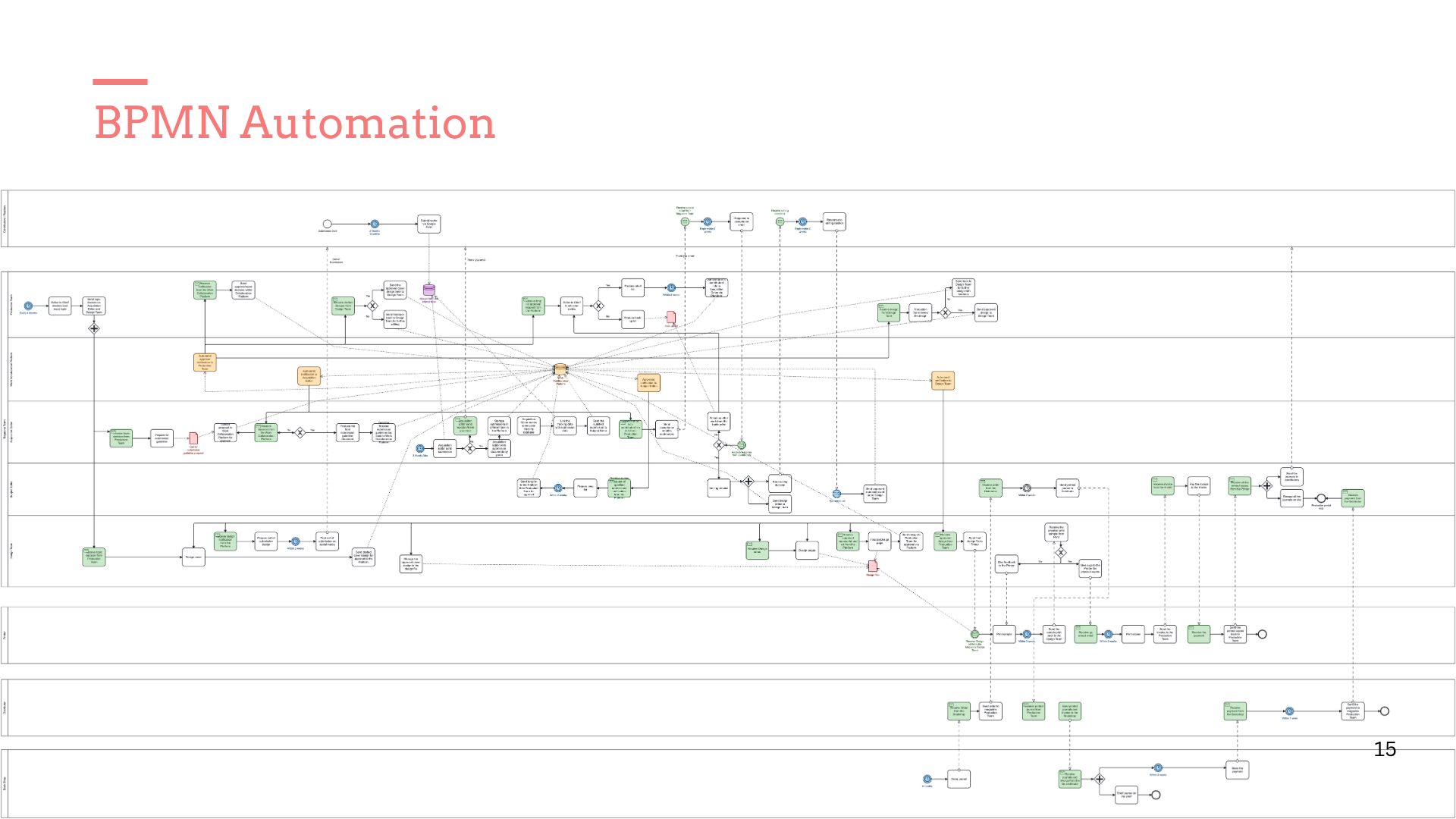
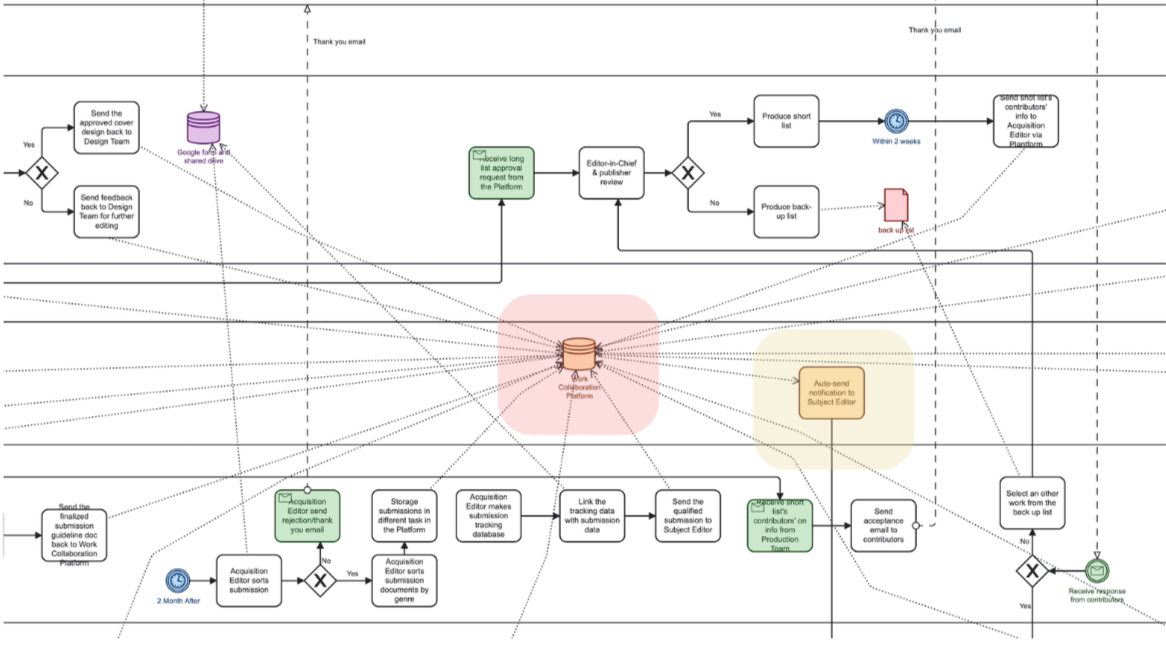
Automation: The “Silent Administrator”
Centralized Platform
Single source of truth for submissions, decision, and handoffs
Automated intake
replacing the email inbox with a structured web form.
structured web forms capture metadata upfront and route manuscripts by genre.
Structured approvals
system-triggered tasks replace email threads and create a clear approval trail.
prevents the risk of lost emails and time wasting.

Part III
Literary Journal Leadership Response

Part IV
Closing and Future